Ebook Free Happy Money: The New Science of Smarter Spending, by Elizabeth Dunn; Michael Norton
Exactly how can? Do you assume that you don't require adequate time to go for shopping publication Happy Money: The New Science Of Smarter Spending, By Elizabeth Dunn; Michael Norton Don't bother! Merely rest on your seat. Open your gizmo or computer system and be online. You could open up or check out the link download that we gave to obtain this Happy Money: The New Science Of Smarter Spending, By Elizabeth Dunn; Michael Norton By this way, you can obtain the online book Happy Money: The New Science Of Smarter Spending, By Elizabeth Dunn; Michael Norton Checking out the e-book Happy Money: The New Science Of Smarter Spending, By Elizabeth Dunn; Michael Norton by online can be really done quickly by saving it in your computer system as well as gadget. So, you can proceed whenever you have spare time.
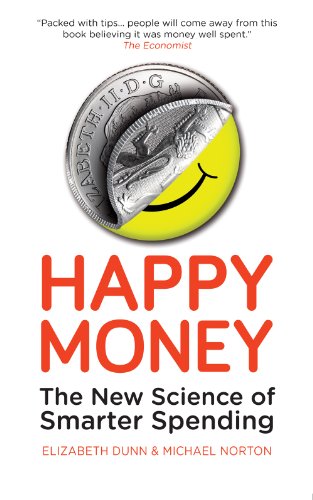
Happy Money: The New Science of Smarter Spending, by Elizabeth Dunn; Michael Norton

Ebook Free Happy Money: The New Science of Smarter Spending, by Elizabeth Dunn; Michael Norton
Happy Money: The New Science Of Smarter Spending, By Elizabeth Dunn; Michael Norton. Welcome to the most effective site that available hundreds type of book collections. Here, we will certainly provide all books Happy Money: The New Science Of Smarter Spending, By Elizabeth Dunn; Michael Norton that you require. The books from renowned authors and also publishers are offered. So, you can take pleasure in currently to obtain one by one sort of publication Happy Money: The New Science Of Smarter Spending, By Elizabeth Dunn; Michael Norton that you will certainly browse. Well, pertaining to guide that you desire, is this Happy Money: The New Science Of Smarter Spending, By Elizabeth Dunn; Michael Norton your option?
Here, we have many publication Happy Money: The New Science Of Smarter Spending, By Elizabeth Dunn; Michael Norton and collections to review. We likewise serve variant types and also type of guides to browse. The enjoyable publication, fiction, past history, novel, scientific research, and various other kinds of e-books are available here. As this Happy Money: The New Science Of Smarter Spending, By Elizabeth Dunn; Michael Norton, it turneds into one of the preferred book Happy Money: The New Science Of Smarter Spending, By Elizabeth Dunn; Michael Norton collections that we have. This is why you are in the best website to view the impressive publications to possess.
It will not take even more time to purchase this Happy Money: The New Science Of Smarter Spending, By Elizabeth Dunn; Michael Norton It won't take even more cash to publish this e-book Happy Money: The New Science Of Smarter Spending, By Elizabeth Dunn; Michael Norton Nowadays, people have been so wise to make use of the technology. Why do not you utilize your gadget or other gadget to conserve this downloaded and install soft file book Happy Money: The New Science Of Smarter Spending, By Elizabeth Dunn; Michael Norton Through this will let you to always be accompanied by this book Happy Money: The New Science Of Smarter Spending, By Elizabeth Dunn; Michael Norton Certainly, it will be the most effective good friend if you review this book Happy Money: The New Science Of Smarter Spending, By Elizabeth Dunn; Michael Norton until finished.
Be the first to obtain this publication now and get all reasons why you have to read this Happy Money: The New Science Of Smarter Spending, By Elizabeth Dunn; Michael Norton Guide Happy Money: The New Science Of Smarter Spending, By Elizabeth Dunn; Michael Norton is not only for your tasks or necessity in your life. Publications will consistently be an excellent close friend in each time you check out. Now, let the others understand about this web page. You could take the benefits and also discuss it also for your buddies as well as people around you. By this method, you can truly obtain the meaning of this publication Happy Money: The New Science Of Smarter Spending, By Elizabeth Dunn; Michael Norton beneficially. Just what do you consider our suggestion here?
Two professors combine their fascinating and cutting-edge research in behavioral science to explain how money can buy happiness—if you follow five core principles of smart spending.
Most people recognize that they need professional advice on how to earn, save, and invest their money. When it comes to spending that money, most people just follow their intuitions. But scientific research shows that those intuitions are often wrong.
Happy Money offers a tour of research on the science of spending, explaining how you can get more happiness for your money. Authors Elizabeth Dunn and Michael Norton have outlined five principles—from choosing experiences over stuff to spending money on others—to guide not only individuals looking for financial security, but also companies seeking to create happier employees and provide “happier products” to their customers. Dunn and Norton show how companies from Google to Pepsi to Charmin have put these ideas into action.
Along the way, Dunn and Norton explore fascinating research that reveals that luxury cars often provide no more pleasure than economy models, that commercials can actually enhance the enjoyment of watching television, and that residents of many cities frequently miss out on inexpensive pleasures in their hometowns. By the end of this “lively and engaging book” (Dan Gilbert, author of Stumbling on Happiness), you’ll be asking yourself one simple question every time you reach for your wallet: Am I getting the biggest happiness bang for my buck?
- Sales Rank: #12768998 in Books
- Published on: 2014
- Original language: English
- Number of items: 1
- Dimensions: 7.80" h x .63" w x 5.08" l, .49 pounds
- Binding: Paperback
Review
"If you think money doesn't buy happiness, then you're just not spending it right. In this lively and engaging book, Dunn and Norton use the latest scientific research to show how you can get a bigger emotional bang for your hard-earned bucks. Happy Money isn't a purchase; it's an investment—and a shrewd one at that."—Daniel Gilbert, author of Stumbling on Happiness
“No one understands how to get more happiness out of our money better than Liz Dunn and Mike Norton. Their research is not only on the cutting edge—it changes where the edge is. Like stand-up comedians of science, Dunn and Norton take ordinary observations that everybody experiences and craftily distill them with a clarity that makes us laugh, and then makes us think. They have done us a great service by sharing their knowledge with us in the easy-to-apply principles they present in this book.”—Dan Ariely, author of Predictably Irrational
“How to spend smarter? Read this book!—a rare combination of informed science writing, rollicking good fun, and practical pointers for a more flourishing and compassionate life.”—David G. Myers, author of The Pursuit of Happiness
"Many books have been written to tell you how to make money, save money, and invest money. Now there's a book that can tell you how to spend it. Wisely."—Chip Heath, co-author of Made to Stick and Switch
"[Dunn and Norton's] infectious enthusiasm for their subject is admirable.... They provide an interesting exploration of increasing happiness by buying time, as well as ways to address budgeting."—Kirkus Reviews
"University of British Columbia psychology professor Dunn and Harvard Business School marketing professor Norton, friends from graduate school, offer a witty, lively guide to changing the philosophy behind spending so that it brings you true joy.... Readers cannot help but be charmed by this funny, warm guide to creating the good life from scratch."—Publishers Weekly
"This small, snappily written book is focused on five points, all directed at enabling people to get more bang for their bucks... Buy [this] book, read [it], take the advice [it] offer[s] to heart, and you’ll be a happier person."—Barry Schwartz, Los Angeles Review of Books
“Each of Dunn and Norton's five principles offers a scientifically validated means of increasing happiness. Like asking a surgical expert to perform your heart transplant, following their principles might be better than just winging it. And luckily, spending money is a lot easier and much less messy than major surgery.”—Guy Kawasaki
"Packed with tips...people will come away from this book believing it was money well spent."—The Economist
“Dunn and Norton strive to show how to spend money in less typical but more pleasing ways. They offer five principles you can use to buy happiness…. I love the five principles of happy money because they aren’t about getting more money but getting more out of the money you have.”—Michelle Singletary, The Washington Post
“[Happy Money] is filled with surprising, counterintuitive findings that also produce a spark of recognition…. Dunn and Norton have outlined a series of valuable and instructive findings, demonstrating that people tend to overlook the effects of attention and adaptation, and that they would do better if they were to make expenditure decisions with those effects in mind.”—The New Republic
"[S]hort and breezy but research-heavy."—New York Times
About the Author
Elizabeth Dunn is an associate professor of psychology at the University of British Columbia in Vancouver, Canada. At age twenty-six, she was featured as one of the “rising stars” across all of academia by the Chronicle of Higher Education.
Michael Norton is an associate professor of marketing at the Harvard Business School. His research has twice been featured in The New York Times Magazine Year in Ideas issue. In 2012, he was selected for Wired magazine’s Smart List as one of “50 People Who Will Change the World.”
Excerpt. © Reprinted by permission. All rights reserved.
Happy Money
Make It a Treat
Sarah Silverman loves pot, porn, and fart jokes. But when it comes to indulging in these finer pleasures, the comic and former Saturday Night Live writer has a mantra: “Make it a treat.” This epiphany came to her in the midst of her freshman year at New York University, when a friend found her in the midst of an extended pot bender and imparted some guru-like wisdom: “If you want to enjoy these things—things like weed—you have to make it a treat.”1 On her show, The Sarah Silverman Program, she puts this mantra into action by insisting that her writers temper their innate overreliance on fart jokes.
“Fart jokes make me happier than just about anything in the universe,” she explains. “And for that reason I’m terrified by the idea that someday I might have had enough of them. If they are a genuine treat and a surprise, they are the surest way to send me into tear-soaked convulsions of laughter.” While all of us may not share Sarah Silverman’s humor preferences, her kernel of wisdom—let’s call it Silverman’s Mantra—extends beyond fart jokes. And it can help people make wiser spending decisions. Abundance, it turns out, is the enemy of appreciation.
Many of us are lucky enough to live in a society where chocolate is available in every supermarket, gas station, and movie theater. Ironically, though, this abundance may undermine our enjoyment of it. One afternoon, students came into a psychology lab to complete a simple task: eating a piece of chocolate.2 The following week they returned for a second piece. Overall, the students enjoyed the chocolate less the second time than they had the first. This is the sad reality of the human experience: in general, the more we’re exposed to something, the more its impact diminishes.
It’s not all bad news. Getting used to things can be handy when it comes to cold winters or unpleasant smells. Early one Friday evening, Liz’s Welsh corgi got sprayed by a skunk. In a moment of naïve gallantry, she scooped the stinking dog into her arms, thereby covering herself in the scent, too. After hours of bathing both herself and the dog in tomatoes and other home remedies, Liz found that the scent had faded. She gave the dog a Snausage and headed off to a friend’s party. Moments after Liz’s arrival, the party hostess nervously sniffed the air and exclaimed, “Skunk!” The cure that Liz believed the home remedies had wrought was due to her own olfactory fatigue. After prolonged exposure to the bad smell, Liz became habituated to it, and its pungency faded. Many of us have experienced the process of getting used to bad things. We often fail to realize that a similar kind of habituation can kick in for positive experiences, like buying shiny new toys. From chocolate bars to luxury cars, habituation represents a fundamental barrier to deriving lasting pleasure from our purchases.
Like houses, cars are among the largest purchases that most people make. Is it best to splurge on a BMW, economize with a Ford Escort, or settle for the mid-level option of a Honda Accord? When researchers at the University of Michigan asked students to predict how much pleasure they would experience while driving each type of car, the BMW was the clear winner.3 But do drivers experience more happiness behind the wheel of an expensive car? To find out, the Michigan researchers asked car owners to think back on the last time they had driven their car, rating how much they enjoyed that drive. Although their cars ranged widely in value, from around $400 (a Yugo, perhaps?) to $40,000, there was no relationship at all between the Blue Book value of the car and the amount of enjoyment the owners got from driving it that day.
But here’s the twist in the road: The researchers asked other drivers to list their car’s make, model, and year, and then consider how they typically felt while driving it. When car owners thought about their vehicles in this light, those who owned more expensive cars reported deriving more enjoyment from driving. Suddenly there was a relationship between a car’s value and its emotional payoff. Why? When people are asked how something generally makes them feel, they tend to draw on equally general theories to form an answer. Rather than reconstructing how they felt each of the last fifty times they drove the Bimmer and then averaging these experiences, a BMW owner is likely to think something like, “I own a midnight blue Z4 with three hundred horsepower and a retractable hardtop. Of course I enjoy driving it. Next question.” These undeniably fabulous features are likely to make a big difference for enjoyment during an initial test drive, which is why smart salespeople focus our attention on these features at the time of purchase. Novelty attracts the spotlight of attention, focusing our minds and exciting our emotions. But once we get used to something—even something as nice as a midnight blue Z4—the spotlight moves on. Driving to the grocery store in the dead of winter, we think about being stuck in the left lane behind an octogenarian in an Oldsmobile, about whether the store will have any hot rotisserie chickens left, about almost anything other than the make and model of the car we’re driving. Retractable hardtops just aren’t that relevant in subzero temperatures. And this explains why driving a more expensive car doesn’t usually provide more joy than driving an economy model.
Unless, that is, we make driving a treat. In a final study, the Michigan researchers asked car owners to think about the last time they had driven their car just for fun. When people thought back on their most recent joy ride, individuals with more expensive cars reported more pleasure from driving. But these joy rides were remarkably rare. So, driving a BMW probably won’t provide you with any more pleasure than driving a Ford Escort—except on those rare occasions when your attention turns to the car itself, whether directed by a question from a researcher or a joy ride on a winding mountain road.
The Deceptive Simplicity of Silverman’s Mantra
According to Oprah Winfrey, “The single greatest thing you can do to change your life today would be to start being grateful for what you have.”4 This is good advice. But, like a grapefruit diet, adopting an attitude of gratitude is easy at first but quickly becomes almost impossible. Because novelty captures our attention, we feel buoyantly grateful for things that catch us by surprise.5 The sixteen-year-old who lives out the teenage fantasy of discovering a new car wrapped in a giant red bow on his birthday will no doubt experience a surge of joy and gratitude. But these feelings are likely to fade as being a car owner becomes just another part of his daily experience and identity.
Following Oprah’s advice is hard for all of us, and ironically, it gets even harder as people edge closer and closer to Oprah’s end of the wealth spectrum. In a study of working adults in Belgium, wealthier individuals reported a lower proclivity to savor life’s little pleasures. They were less likely to say that they would pause to appreciate a beautiful waterfall on a hike, or stay present in the moment during a romantic weekend getaway.6 This phenomenon helps explain why the relationship between income and happiness is weaker than many people expect. At the same time that money increases our happiness by giving us access to all kinds of wonderful things, knowing we have access to wonderful things undermines our happiness by reducing our tendency to appreciate life’s small joys.
Just thinking about money can produce some of the same detrimental effects as having a lot of it. If you ever want those around you to act like wealthy people for a few minutes, research suggests that all you have to do is show them a photograph of a big stack of money.7 Seeing this photograph makes people less inclined to linger by a waterfall or savor life’s other little pleasures, just like individuals who actually have a lot of money.8
The idea that wealth interferes with the proclivity to savor echoes the theme of the classic 1964 children’s book Charlie and the Chocolate Factory. The young hero, Charlie Bucket, lives in a tiny two-room house with one bed and four grandparents. While the wealthier kids in the story gorge themselves on a plentiful supply of chocolate bars, Charlie’s family saves up just enough money to give him one chocolate bar a year, on his birthday. Each time, he would “treasure it as though it were a bar of solid gold,” spending days just looking at it before he would finally “peel back a tiny bit of the paper wrapping at one corner to expose a tiny bit of chocolate, and then he would take a tiny nibble, just enough to allow the lovely sweet taste to spread out slowly over his tongue. The next day, he would take another tiny nibble, and so on,” making his annual bar of chocolate last over a month.9
In a Willy Wonkaesque study, Canadian students saw a photograph of money and then ate a piece of chocolate, as researchers surreptitiously observed them.10 Compared to others who hadn’t seen the money, students who saw this photograph spent substantially less time eating their chocolate, chowing it down like Augustus Gloop. The observers also noted less enjoyment on their faces. Because even a simple reminder of wealth undermines our ability to enjoy life’s little treats, living by Silverman’s Mantra may not be easy, at least for those of us who are wealthier than Charlie Bucket. According to Silverman: “That’s why mantras need to be repeated—they’re fucking hard to remember.”11
Most people recognize that they won’t appreciate their car quite as much after owning it for twenty-four months as they did when they first drove it home, just as the twenty-fourth fart joke won’t be as funny as the first one. When researchers at Yale asked people to predict how their enjoyment of various products might change over time, the majority expected their enjoyment would decline, for products ranging from a plasma TV to a kaleidoscope.12 The problem is that it’s easy to lose sight of this knowledge when a shiny new toy is right at your fingertips. In another study, the Yale researchers gave students a kaleidoscope and asked half of them to predict how much they would enjoy playing with it a week later. Others predicted how much they would enjoy it a day later.13 Students expected to enjoy the kaleidoscope just as much regardless of the time frame they considered, even though most of their peers in the previous study believed that enjoyment of a kaleidoscope would decline with time. In other words, though we understand that enjoyment often fades over time, we don’t always apply that knowledge when contemplating a new toy. When researchers prompt people to consider the passage of time, this reminder triggers the correct belief that the tide of enjoyment quickly recedes. In the absence of such reminders, however, people envision an unchanging sea of pleasure. As a result, products often provide less lasting enjoyment than people expect. Indeed, after students took their kaleidoscopes home, they reported enjoying the toys much less if they were contacted a week later rather than a day later.
This drop in enjoyment occurs because people are fundamentally different from thermometers. Put a thermometer in lukewarm water, and the mercury rises to reflect the water’s precise temperature. “It does not matter whether the mercury was previously stored in an oven or an ice bath, or whether it was stored in either place for hours or days or years,” researchers Shane Frederick and George Loewenstein explain. “Mercury has no memory for previous states. Humans and other organisms do not behave this way.”14 Stick your hand in lukewarm water and it may feel piping hot if you’ve just come inside on a frigid winter morning, but cool and refreshing on a sweaty summer afternoon. Leave your hand in the water and the intensity of the initial sensation will soon subside. Our emotional system works in much the same way, making us highly sensitive to change. Understanding this fundamental difference between the thermometer and what we might call the “cheerometer” enables us to develop specific spending strategies designed to combat ennui.
The Wisdom of Candy Corn
Because we lack mercury’s amnesia, our enjoyment of a piece of chocolate typically declines from one week to the next. But there’s a way to maximize the pleasure of that second confection. Temporarily giving up chocolate can restore our ability to enjoy it. After an initial chocolate tasting, students promised to abstain from chocolate for one week.15 Another group of students pledged to eat as much chocolate as they comfortably could, and they received a two-pound bag of chocolate to help them fulfill their pledge. The students who left with this reservoir of chocolatey goodness may seem like the lucky ones. But their sweet windfall came at a price. When they returned the following week to sample additional chocolate, they enjoyed it much less than they had the week before. People only enjoyed chocolate as much the second week as they had the first if they had given it up in between.I
If abundance is the enemy of appreciation, scarcity may be our best ally. As it turns out, all of Mike’s favorite treats are widely available for just a brief period each year: Red Hots (easiest to find in February), candy corn (October), plus peppermint stick ice cream and eggnog (December). Because he takes long breaks from these treats during the summer months, he’s happy all over again when October rolls around and the candy corn starts flowing.
Giving up Red Hots and candy corn can provide an escape hatch from adaptation, helping turn our favorite things back into treats. But we are not advocating austerity, though the simple life does have its adherents. In the name of voluntary simplicity, people on the “Great American Apparel Diet” have given up buying clothes for a year.16 Other individuals have stripped their monthly wardrobes down to just six items.17 As coworkers in nearby cubicles might attest, it is possible to take this strategy too far. Although a quick Google search reveals no end of claims about the benefits of voluntary simplicity, there is little rigorous evidence that emptying your life of worldly possessions results in a Zen-like state of pure bliss.
When Kristen Martini was in her mid-thirties, she moved from a large suburban home to a tiny cottage in the woods, taking only some food, a bit of clothing, and her two children, and leaving behind the enviable trappings of her comfortable life.18 The values and goals that prompted this move—placing personal growth and fulfillment above image and financial success—are indeed strongly linked to happiness. People who describe themselves as voluntary simplifiers do report greater happiness.19 But their happiness appears to stem more from the values and mind-sets associated with voluntary simplicity than from major lifestyle changes. In other words, profound self-denial may be overrated.
Instead, we stress the importance of treats. Liz used to have a latte every day. At first the latte was a treat, especially in graduate school, when it represented a substantial portion of her daily budget. But while rushing to work one day, chugging her latte to ingest a sufficient amount of caffeine before a meeting, she realized that the latte was no longer a treat. She switched her daily drink to the regular brewed coffee that everyone drank before the age of espresso, cutting her coffee budget dramatically. Every so often, though, she decides, “Today is a latte day.” She heads to a coffee shop, orders a latte, and savors the foamy goodness anew.
While there is no convincing evidence that reducing consumption provides a panacea for increasing happiness, a growing body of research suggests that altering consumption patterns can provide a route to getting more happiness for less money. And as we’ll see in the rest of the chapter, even seemingly trivial changes can make a big difference.
Living the Portuguese Dream
Jaime Kurtz, a social psychologist and dog lover, has a long-standing dream: to create puppies that stay puppies forever. Ironically, her own research (thankfully not in genetic engineering) suggests that this is a bad idea. As Jaime’s research demonstrates, when we know something won’t last forever, we’re more likely to savor it. When college seniors feel that the end of their undergraduate experience is near, they savor their remaining time by taking the scenic route to class, snapping photos, and visiting their favorite places and classmates.20
Knowing that something won’t last forever can make us appreciate it more. For adults in their sunset years, that “something” becomes life itself. While young people seek abundance, older adults engage in a kind of pruning process, trimming away the people and things that don’t deliver an emotional payoff.21 In 1995, at the age of 120, a Frenchwoman named Jeanne Calment officially became the oldest person ever. When a Newsweek reporter asked her about the sort of future she envisioned for herself, the super-centenarian replied, “A very short one.”22 Recognizing that an end is near holds a key to happiness, helping us turn readily available comforts back into treats.
This idea also helps to explain an enduring puzzle of forgone pleasure: Why don’t people get around to visiting famous landmarks in their own hometown? After living in London for a whole year, residents typically report that they’ve visited fewer landmarks—from Big Ben to Kensington Palace—than visitors who have only been there for two weeks.23 Although London attracts more international visitors than any other city in the world,24 most London residents report having visited more landmarks in cities other than their own. Only when they themselves are about to move away, or when out-of-town guests come to visit, do they seek out the sights of their own city. When people get around to visiting their hometown landmarks, they report enjoying the experience. The trouble is that when a pleasurable activity is always available, we may never get around to doing it, thereby missing out on a relatively inexpensive source of happiness.
The Big Ben Problem suggests that introducing a limited time window may encourage people to seize opportunities for treats. Imagine you’ve just gotten a gift certificate for a piece of delicious cake and a beverage at a high-end French pastry shop. Would you rather see the gift certificate stamped with an expiration date two months from today, or just three weeks from now? Faced with this choice, most people were happier with the two-month option, and 68 percent reported that they would use it before this expiration date.25 But when they received a gift certificate for a tasty pastry at a local shop, only 6 percent of people redeemed it when they were given a two-month expiration date, compared to 31 percent of people who were given the shorter three-week window. People given two months to redeem the certificate kept thinking they could do it later, creating another instance of the Big Ben Problem—and leading them to miss out on a delicious treat. Several years ago, Best Buy reported gaining $43 million from gift certificates that went unredeemed,26 propelling some consumer advocates and policy makers to push for extended expiration dates. But this strategy will likely backfire. We may have more success at maximizing our happiness when treats are only available for a limited time.
In June 2011, a chorus of tweets heralded the arrival of a culinary wonder:
@BJIT: #doubledown is coming back!!! God bless the colonel!
@kevinelop: OMG!! . . . The Double Down is back at KFC!!!
@iamToddyTickles: KFC’s #doubledowns for Breakfast. Mmmmm. Mmmmmm. Yummmmmmy. I’m full.
Despite his precious Twitter handle, iamToddyTickles appears to be a fully grown man in his profile picture, yet his tweet echoes the slobbery exuberance of Scooby Doo. What could have prompted such an onslaught of emotion, ranging from unadulterated excitement to utter incoherence? KFC’s Double Down features two slices of bacon, two kinds of cheese, and the Colonel’s secret sauce, all sandwiched between two slabs of fried chicken. According to KFC, it’s “so meaty, there’s no room for a bun!”
This bunless “sandwich” was a hit in the United States, but in Canada, it was a sensation. The Double Down (translated for our French-Canadian friends as Coup Double, or “Double Punch”) made KFC history, becoming the chain’s best-selling new item in Canada ever.27 When the sandwich made its Canadian debut in the fall of 2010, KFC sold a million Double Downs in less than a month, enough “to stretch across 2,083 hockey rinks,” according to the company’s press release.28 (For readers unfamiliar with Canadian culture, all Canadian measurements are in hockey rink units, or HRUs.) Social media activity was intense, and consumers even organized Double Down “Bro Downs” where men competed to see who could guzzle the most Double Downs.
In response to the initial runaway success of its product, KFC pulled the sandwich off the menu across most of Canada. This move may seem strange in an industry where a pivotal goal—in the words of Coca-Cola’s long-standing mantra—is to be “within an arm’s reach of desire.”29 According to KFC Canada’s chief marketing officer, David Vivenes, KFC is about “making moments that are so good.” But by removing the Double Down from the menu, KFC made the moment when it came back in 2011 not just “so good,” but even better. Nor is KFC alone in adopting this approach. McDonald’s has pursued a similar strategy with its McRib sandwich, a ground pork patty with barbecue sauce, onions, and pickles. Although pork supplies are steady, the McRib has been continually taken off the market and reintroduced—always for a limited time—over the past three decades. Ashlee Yingling, of McDonald’s media relations department, explained that the company makes the McRib available in the fall, thereby creating nostalgia for summer barbecues.30
The consumer response has been obsession. If you want to know when and where you might get your hands on a McRib, you can visit McRib fan Alan Klein’s “McRib Locator” website (http://kleincast.com/maps/mcrib.php), a United States map with a comprehensive list of confirmed, possible, and questionable McRib sightings. McDonald’s kicked off its latest McRib launch with a “Legends of the McRib” event in New York City. The McRib was a key contributor to a 4.8 percent increase in company sales in November 2010.31
Long before innovations like bunless sandwiches and boneless ribs, Disney began harnessing the power of limited availability by making its movies available for limited periods.32 The company locks away Dumbo, Cinderella, Peter Pan, and other hits in the “Disney vault,” where they remain unavailable for years at a time. Like Cinderella herself, these movies rush out of the ball while the party’s still going strong, before the magic wears off. Many other companies adopted similar strategies, and the psychologist Robert Cialdini devotes an entire chapter of his classic book Influence to the creative and downright crafty ways in which scarcity has been used to move product. Although Cialdini admits to a “grudging admiration for the practitioners who made this simple device work in a multitude of ways,”33 he urges readers to resist the lure of scarcity marketing, coaching them on “how to say no.”34 If we take Silverman’s mantra and the science behind it seriously, however, scarcity marketing starts to look like a win-win. That is, people may savor everything from the Double Down to Dumbo more when they know these delights won’t be available forever, increasing their own satisfaction even as companies ring up increased sales.
Applying this principle is straightforward when it comes to ephemeral delights such as movies and bunless sandwiches. But what about major purchases? Derek Lee is an aspiring actor and filmmaker who owns a beautiful, bright red Mini Cooper. If you owned a sporty little car, you might be tempted to drive it all the time, settling in to the comfy leather seats whenever you needed to get groceries or meet friends for dinner. But Derek lives in Vancouver, Canada, where public transit is excellent and car insurance is expensive. So, when Derek first got the Mini Cooper, he kept it in the garage and insured it only on the days when he really wanted to use it, rather than paying regular monthly car insurance and using the car every time he needed to run an errand. As his mildly traumatized former passengers can attest, Derek got the most out of those days, hugging turns and accelerating through straightaways like he was auditioning for a car commercial. Recently, he decided to insure his car full-time, but now, he says, driving is “just about contained road rage and not killing people.” He looks back wistfully on the earlier years, when he “drove exuberantly.”
Car-sharing companies like Zipcar provide customers with a similar opportunity for exuberance by turning driving back into a treat. Whereas traditional car rental companies choose standard cars in the dullest colors of the rainbow, the first Zipcar was a tricked-out lime-green Volkswagen Beetle.35 The founder and former CEO of Zipcar, Robin Chase, pointed to the key difference between driving your own car and driving a Zipcar: You use your own car for everything. Zipcars are for “outings.” Higher-end companies, like the Classic Car Club, founded in London in 1995, take this approach to its logical extreme. For a hefty membership fee, the Classic Car Club gives members access to a “staggeringly stylish fleet of cars,” including Ferraris and Maseratis.36 In Manhattan, club members pay almost $11,000 for thirteen days of driving the club’s “high-end supercars.” This doesn’t sound like a bargain. But the cost of actually owning one of these cars is mind-boggling. And we’re willing to bet that members’ attention stays focused on the “supercars” during those magical thirteen days, making each of those eleven thousand dollars count.
Car-sharing is now a familiar concept, but creative companies are making it possible for their clients to share ownership and access to just about everything, from villas and handbags to dogs and French truffle trees.37 According to our favorite Portuguese saying, “You should never have a yacht; you should have a friend with a yacht.” (To be honest, it’s also the only Portuguese saying we know.) By joining SailTime, members can live the Portuguese dream by sharing a yacht with up to seven other people. In describing SailTime, a recent media story warned consumers that sharing the yacht means “there is no guarantee you will always be able to use it when you want.”38 This apparent limitation is precisely what helps consumers make it a treat. Limiting your access to everything from the McRib to Maseratis helps to reset your cheerometer. That is, knowing you can’t have access to something all the time may help you appreciate it more when you do.
And Now for a Brief Interruption
When you love a television show—say, The Office—you might think the best way to maximize your happiness is to buy the DVD set and watch all the episodes straight through. Getting rid of the commercials and eliminating the weeklong wait between episodes seems sensible. But research suggests that taking breaks between episodes can increase your enjoyment. Perhaps most amazingly, commercials can improve the experience of watching television.39 Even entertaining shows can start to drag after five to seven minutes, decreasing our enjoyment. Commercials disrupt that adaptation process, so when the show comes back on, we can fall in love with Jim and Pam all over again.
As you might expect, the content of the program matters. Television shows like Lost and CSI, which cut unexpectedly from one dramatic scene to another, may circumvent the need for commercials by providing built-in disruptions. For experiences that are more uniform, though, interruptions can help to “re-virginize” us, wiping our pleasure slates clean. And these interruptions may increase our overall pleasure even if the interruptions themselves are annoying. To test this idea, researchers created a mash-up of popular songs, including “Lose Yourself” by Eminem, “My Sharona” by the Knack, and “Sometimes” by Michael Norton (yes, that Michael Norton).40 They created sixty-second versions of each song by taking brief samples and looping them, then played the “song” without interruption for one group of listeners. Others, however, listened to the first fifty seconds, and then heard ten seconds of irritating guitar feedback lifted from an Australian punk band. Although 99 percent of people expected to prefer the continuous song, without guitar feedback, listeners enjoyed the song more when it was disrupted. They were willing to pay more than twice as much to attend a concert by the artist compared to people who heard the continuous song.
These results create an opportunity and a puzzle for purveyors of pleasure. Take the perspective of a massage therapist. Before receiving a massage, three-quarters of people reported that they would prefer to savor the experience without interruption.41 But those who were forced to take a break during the massage ended up enjoying it more, and were willing to pay more for their next massage. Leif Nelson and Tom Meyvis argue that “the thoughtful masseuse would maximize customer enjoyment by inserting breaks in the massage.”42 In the same breath, though, they note that this strategy comes with a catch: “Customers who are informed of the break in advance may choose to go to another, more monotonous masseuse.” (Reading break: picture in your mind what a thoughtful masseuse and a monotonous masseuse might look like.)
Even the briefest of breaks can allow our cheerometers to reset. Unfortunately, resetting requires that we accept a momentary drop in pleasure. A commercial is less entertaining than any given moment of a halfway decent TV show. But that irksome “$5 Footlong” Subway ad makes the show more enjoyable once it comes back on. Similarly, getting a backrub is better than not getting a backrub at any given point in time—but taking a break still makes the overall backrub much better.
Channeling Your Inner Tim
In the 2011 comedy Cedar Rapids, Ed Helms plays an insurance salesman named Tim Lippe who has never ventured outside his sleepy hometown of Brown Valley, Wisconsin. Then his company sends him to a convention in the “big city” of Cedar Rapids, Iowa. Everything about Cedar Rapids dazzles Tim, from the big buildings to the intoxicating smell of chlorine wafting up from the hotel pool. Because Tim has never traveled before, each tiny discovery provides a fresh delight.
The more people travel, the less likely they are to savor each trip. In one study, United States residents recorded how many countries they had visited and then imagined what they would do after winning a trip to three of the most common vacation destinations for Americans (California, Florida, and New York), as well as the top three “dream” destinations for Americans (Italy, Australia, and Ireland).43 Infrequent travelers like Tim said that they would savor the trips by expressing their excitement, talking to friends and family, getting their work done ahead of time, and looking at photos afterward. Individuals who had traveled extensively exhibited a blasé attitude toward the commonplace destinations (though they mustered some enthusiasm for the dream destinations).
Did the commonplace destinations pale in comparison to the other places the world-weary had visited? Perhaps the sunny shores of Florida fail to impress when compared to the beautiful black sand beaches of Bali. This explanation is reasonable but, as it turns out, wrong. As we saw with strawberries and space travel, experiences elude easy comparisons. Bali and Florida are like apples and oranges, and thinking of one doesn’t usually trigger comparisons to the other. Rather, traveling to exotic places like Bali can change the way we see ourselves, creating a broader problem. The more countries people have visited, the more they self-identify as “world travelers.” This in turn undermines their motivation to savor trips to enjoyable-but-unextraordinary destinations.
If you’ve been lucky enough to visit lots of places in the world, you may be destined to a lifetime of diminished savoring during visits to commonplace destinations, unless you can channel your inner Tim Lippe. In a study conducted at the Old North Church, one of the most-visited historical landmarks in Boston, American tourists completed a travel checklist just before entering the church, marking off the other cities they had visited.44 Some tourists saw a checklist that included destinations such as New York, Orlando, and Las Vegas, places many Americans have visited. Others saw a checklist that included more exotic international destinations, such as Tokyo, Paris, and Sydney. As you’d expect, tourists checked off a lot more places when they were presented with the list of U.S. destinations, leading them to feel more well-traveled than people presented with the broader list of international destinations.
The tourists went on their way, heading inside to check out the church. But the checklist changed how they behaved when they got there. Those who saw the list of exotic international destinations entered the church feeling like they were not well-traveled, and ended up savoring their visit more. They spent significantly more time enjoying the church compared to those who saw the domestic checklist.
An app from a company called Travellerspoint enticed users with the opportunity to “plot your trips on a map to show everyone how well-travelled you are.” But using this app might not be such a great idea if you want to enjoy your visits to the Old North Churches of the world. It may be better to map out all the places you’d like to visit, but haven’t yet. One of the world’s most revered sages—the Dalai Lama—advises us to appreciate what we do have rather than focusing on what we don’t.45 But research suggests that focusing on what we haven’t done may trigger us to appreciate what we’re doing now. Because our cheerometers lack the objectivity of mercury, the way we perceive an experience depends partly on how we perceive ourselves. And changing our sense of identity, even temporarily, can make it easier to appreciate the simple pleasure of a hotel pool.
Mating in New Pastures
As a graduate student, Liz noticed something intriguing about the behavior of her longtime boyfriend, Benjamin. When he was in a bad mood, Benjamin acted cranky around her, because he knew that Liz would put up with his unpleasant behavior. But when he bumped into a stranger or casual acquaintance, Benjamin perked right up, acting pleasant and cheerful. Because social graces forced him to abandon his own grumpiness, his bad mood often dissipated.
To understand her boyfriend’s behavior, Liz invited long-term heterosexual couples into the lab. Each individual interacted either with his or her own romantic partner or with an opposite-sex stranger from another couple.46 Just like Benjamin, people acted perky and pleasant when they interacted with strangers. And their own positive behavior enhanced their mood in a way that they failed to foresee ahead of time. Liz and her colleagues began to refer to this phenomenon as “the Benjamin Effect.”
Rather than ditching your long-term romantic partner in search of a stranger, try harnessing the Benjamin Effect to improve your romantic relationship. In a follow-up study, Liz brought more couples into her lab and asked each couple to spend some time together. She told some of them to put their best face forward as they would with someone they had just met. Meanwhile, the others just had a regular old interaction with their romantic partner. People derived significantly more joy from interacting with their romantic partners when they treated the loves of their lives as though they were complete strangers.
Before writing off Valentine’s Day as an excuse to sell greeting cards, remember the value of making an effort (every once in a while) to be your best self around your romantic partner. Elizabeth Haines is a forty-year-old mother of two who has been married to her husband, Terry, for more than a decade. Although Elizabeth and Terry are both working parents, they make time each week for “date night.” It would be easy to flop on the couch and put in a DVD. Instead, they pay a babysitter and hit the town. “I do that kind of cougar-mom thing. You know, tight jeans, cute top, some wedge sandals. I dress as if I was going on a date,” Elizabeth explains.
Elizabeth and Terry often head to a local restaurant for dinner and drinks, but her favorite date nights involve less mundane activities, like seeing a new band perform in the city. When couples do novel, exciting things together, the relationship itself feels novel and exciting. In one study, couples bound together—literally, with Velcro at their wrists and ankles—performed a series of novel physical challenges.47 Other couples performed a duller task, slowly rolling a ball back and forth while stationed on opposite sides of a large room. Afterward, the Velcroed couples reported greater relationship satisfaction and scored higher on the Romantic Love Symptom Checklist, which includes symptoms of love such as experiencing “tingling” while thinking of the beloved.
The value of novelty emerges even in the bovine version of date night. Bulls get bored with the artificial “mating” devices that farmers use to extract their semen. Introducing some novelty—by changing the location of the device, for example—can reduce the time it takes the bulls to ejaculate.48 While reducing time to ejaculation is probably not the goal of most human date nights, injecting novelty can inoculate long-term relationships against boredom. And boredom turns out to be a surprisingly potent force that can chip away at even the strongest relationships. Current levels of boredom predict a married couple’s overall satisfaction with the relationship almost a decade later.49 Maybe money can’t buy love, but it can buy novel, exciting activities. And given the central importance of romantic relationships for human happiness, anything we can do to make time with our partners a treat is money well spent.
The value of novelty extends far beyond romantic relationships, all the way to toilet paper. Toilet paper comes in different colors and textures—Quilted? Did someone’s grandmother knit it for you?—but for the most part, it’s as commoditized as a product can be. Charmin, however, had a different idea about toilet paper. The company found a way to make using their product a “treat” by providing consumers with something novel and unexpected. How? Take a moment to guess. And keep it clean, please.
If you guessed what they tried, you are a marketing genius. Charmin introduced Potty Palooza, a traveling luxury port-a-potty “adorned with all the amenities you would find at home—from wallpaper and skylights to hardwood floors and televisions.”50 Imagine being at a crowded sports event, expecting the typically horrific bathrooms, and stumbling instead into a toilet paradise. Potty Palooza effectively transforms the mundane act of waste management into a treat.
Adding a dose of novelty can also short-circuit our tendency to consume something that no longer provides pleasure. People in the habit of buying movie theater popcorn will eat just as much of it whether it is stale or fresh, even though they report getting little enjoyment from the stale stuff.51 Popcorn lovers might assume that breaking this habit would be tough. But novelty is all it takes. Try this for yourself: Next time you go to the movies, eat your popcorn with your nondominant hand (if you’re a righty, eat with your left hand; if you’re a lefty, you probably think you are too unique and creative to be bothered with our tasks). When popcorn lovers eat with their nondominant hand, they free themselves from mindless consumption. They still eat plenty of this salty, buttery treat when it’s fresh and delicious, but they leave it aside when it’s stale and unsatisfying—when it’s no longer a treat.
Can Everyman Become a Silverman?
Practicing Silverman’s Mantra demands recognizing how different we are from thermometers. Because the cheerometer is sensitive to both the past and the future, giving something up for a few months or a few minutes can allow us to recalibrate. Just knowing that we have limited access to something, and that it’s not an inextricable part of our identity, may help us appreciate it more. Taking a break from some things, like spouses and toilet paper, is both complicated and messy. These cases call for an injection of novelty. Applying Silverman’s Mantra is important when—like a skunked Liz at a party—we find ourselves no longer noticing what we’ve got. These strategies are especially valuable when it comes to treats that cost a little more, where we pay a premium for pleasure: things like lattes, fast cars, and Belgian chocolate bars.
Silverman’s Mantra stands in opposition to the ethos of modern America. Whereas American culture values abundance and big purchases (big cars, big homes, big-box stores), French culture emphasizes the value of little treats—petits plaisirs.52 This cultural difference is particularly stark at the dinner table. The French eat less than Americans, taking more time to savor the taste and texture of their food.53 Even at McDonald’s. In a 2003 study, researchers compared a McDonald’s in the middle of Paris to a McDonald’s in the middle of Philadelphia.54 Even though a large order of fries was about 30 percent smaller in Paris, Parisians took about 50 percent longer to sit and eat their food than their American counterparts.
In cultures where the Protestant work ethic has taken hold, treats often seem improper, or even immoral—leading people to feel that they should only indulge when they have a good reason for doing so.55 American college students expect to feel guilty when they splurge on a treat like a spa treatment or dinner out for no particular reason. For most of them, though, these expected feelings of guilt never materialize, overshadowed instead by the pleasure of the treat. Yet they continue to believe they will feel guilty about future indulgences.56 The little treats of daily life may provide a purer source of pleasure than people realize.
This failure to appreciate the value of treats may push people away from enjoyable experiences. In one study, researchers paid people $2, telling them they could keep the money or use it to purchase a ticket for a lottery.57 When the lottery prize was a $200 dinner to a gourmet restaurant, 84 percent of people bought a ticket. When the prize was $200 cash, only 65 percent of people bought the ticket. This difference is remarkable. After all, you could use the $200 in cash to buy a $200 dinner, or anything else you desired. But the opportunity for a treat in the form of a gourmet dinner provided a more compelling incentive than cash, which most people thought they’d use for boring necessities, such as groceries. Until, that is, the researchers presented the two options side by side. When people had the choice between the dinner or the cash, more than twice as many people chose the cash over the dinner. Choosing cash is economically rational, sensible, and defensible—but, given the value of treats, probably detrimental for happiness.
What would you enjoy more, a small, heart-shaped chocolate (worth fifty cents) or a slightly larger chocolate (worth $2) in the shape of a cockroach? Faced with this choice, most people say they would enjoy eating the heart-shaped chocolate more. And yet most people say they would choose the cockroach-shaped chocolate.58 The hard, economic attributes (price, size) win out over the “softer” features (roachiness) during decision-making, even though the softer features matter for enjoyment. This makes sense when choosing vacuum cleaners and other utilitarian products. But when it comes to chocolate and other treats, people may weigh economic considerations to an extent that few economists would condone.59
In the heart of Beverly Hills, at the luxurious Four Seasons spa, a ninety-minute massage costs $230, whereas three thirty-minute massages cost a whopping $330. All else being equal, most people report they would rather have a larger number of smaller pleasures, rather than a smaller number of larger pleasures.60 For example, people prefer to get $5 a day for five days, rather than $25 all on one day. But all else is rarely equal. From an economic perspective, the ninety-minute massage at the Four Seasons is clearly the better deal. But consider whether it’s a better deal from your perspective. Three thirty-minute massages give you three treats instead of one experience that you’ll likely tire of before it’s over, providing you with a bigger happiness payoff for each dollar spent.
I. It’s possible that people felt dejected during the week they gave up chocolate, perhaps offsetting the pleasure they experienced when they got to have it again. But everyone also reported how they felt each day during the week between chocolate tastings, and there was little evidence of diminished happiness among those who gave up chocolate.
Most helpful customer reviews
175 of 177 people found the following review helpful.
Not What I Expected, But I Like It.
By Mother of Three
The title, "Happy Money: The Science of Smarter Spending", gave me the impression that this was another book about clipping coupons and recycling cereal boxes. Cynically, I opened it up.
The first sentence of the prologue shattered that preconception immediately. This book aims squarely for the "money can't buy happiness" idiom, with the idea that it can...if utilized properly.
Not in the usual ways, either. It's not necessarily how much you spend, or saving tons of cash for a rainy day so you feel more secure about the future.
There are five principles that can lead to monetary happiness:
1. Buy Experiences
2. Make it a Treat
3. Buy Time
4. Pay Now, Consume Later
5. Invest in Others
"Buy Experiences" essentially means to spend money on memorable experiences instead of expensive toys, because you are able to relate to those experiences on an emotional level for much longer that with objects.
I had actually utilized this concept myself recently. I had come into a small inheritance, and instead of paying down bills like we had originally planned, we splurged on our first real family vacation to the beach. My son still talks about going back, and thoughts of that time together still spark warm feelings.
"Make It A Treat" focuses on the concept of overconsumption creating a weakening of the enjoyment factor. If you have something every day, even if it's something you love, it becomes routine rather than fully enjoyable.
I discovered this when for budgeting reasons, I stopped buying coffee house specialty drinks and made coffee at home. Once in a while I'd get a gift card or decide to splurge, and those moments took me back to the first time I'd tasted one, and it was always an amazing sensation. They explain why that is in detail, and it's fascinating. I plan to apply this to other aspects of my life, now that I'm aware of it.
"Buy Time": The idea that you make life decisions that allow you to have more free time. I'm a busy mom, so Multitask is my middle name. Suggestions include outsourcing unnecessary tasks, like housecleaning. Much as I'd love to do that, it's not possible. But I do have an example of my own.
We instituted "Takeout Wednesdays", where my husband is responsible for bringing home dinner every Wednesday. That gives me free time I can plan on, and lets me get things done AND get down time.
"Pay Now, Consume Later" was a fascinating concept. In society today, we're more apt to do the reverse, thanks to credit cards. Essentially, it's sort of like half the fun of a roadtrip is getting there. When consummation is delayed, from something as simple as eating candy to attending an event, the enjoyment is increased. When something's already paid for, if enough time passes, it seems "free" when it's actually consumed.
I've personally seen this in action when I backorder things online, like books, video games and DVDs. It's almost like a prize coming in the mail, because the actual payment process is dim in my memory. I've also stashed candy away for until the kids are asleep, and it always tastes even better then. (Don't judge me. (.:)
Last concept: Invest In Others. This hits on how donating or spending money on others feels better than buying things for yourself. I totally got with this chapter, because I deal with that scenario all the time.
An example: Recently, I had a friend give me two free product coupons for a very expensive brand of bread. I was picking mine out, and a lady next to me mentioned she loved it, but it was too expensive. I tapped her on the shoulder and gave her one of the coupons. The free item would have given me pleasure, but giving it away gave me a great feeling that still lingers.
Toys and goodies are great, but doing onto others is incredible.
This was an easy and fun read...I liked the authors' (Elizabeth Dunn and Michael Norton) writing style. It reminded me of sitting around with friends over coffee and chatting. I had never read anything like it, and really thought it was original.
I already embrace these principles on some level, but look forward to applying them to more of my life choices, and seeing my money make me happier. It'll have a permanent place on my bookshelf...and in my bathroom! (But that's another chapter.)
I received a complimentary copy from BzzAgent in exchange for my review.
10 of 10 people found the following review helpful.
Good but not worth reading the whole book for a few reasons
By Bradley Bevers
This is one that I've had on the shelf for a long time and finally got around to reading. Not nearly as good as I thought it would be, but some good takeaways.
Positives:
* Principles are good. Worth reading, or skimming, main points
* Short
Negatives:
* Never felt substantial enough for a book. Long article.
* Some cases used are not convincing. Needs more support, even though I agreed with principles
* Tone seemed off, authors reference themselves too many times. Just seemed out of place.
* Last chapter advocated too much government intervention
Overall, some good principles. I would look for a summary or article by the authors and read that, you will save some time and get 95% of what there is here.
6 of 6 people found the following review helpful.
Read you will thank me later.
By stingray
I really loved this book. I heard about it from Tim Ferris podcast-fourhourworkweek. He said that he is trying spend more time with his parents as their time on earth is limited as they get older and he changed his attitude about spending money and time from the book.
I ordered it and read it. My takeaway is that I never consciously related happiness with spending money besides the obvious material things. The five principles of happy money are :1. buy experience vs. materials (buyer remorse occurs with materials rarely with experience) 2. buy time (don't spend 4 hours in a layover to save a hundred bucks) spend money so you could have more time to do things you enjoyed. 3. Make it a treat(if you have latte every day is no longer a treat but if you have it only Tuesday, that changes)4. pay now , consume later( it means buy things that you experience positive expectations I.e. Vacation, also called the French term Se Rejouir getting pleasure now from something that will happen in the future or also called the drooling factor. And 5. invest in others, pay it forward, studies after studies show giving makes you happier then always spending on yourself.
Happy Money: The New Science of Smarter Spending, by Elizabeth Dunn; Michael Norton PDF
Happy Money: The New Science of Smarter Spending, by Elizabeth Dunn; Michael Norton EPub
Happy Money: The New Science of Smarter Spending, by Elizabeth Dunn; Michael Norton Doc
Happy Money: The New Science of Smarter Spending, by Elizabeth Dunn; Michael Norton iBooks
Happy Money: The New Science of Smarter Spending, by Elizabeth Dunn; Michael Norton rtf
Happy Money: The New Science of Smarter Spending, by Elizabeth Dunn; Michael Norton Mobipocket
Happy Money: The New Science of Smarter Spending, by Elizabeth Dunn; Michael Norton Kindle


![[(Think Better: An Innovator's Guide to Productive Thinking )] [Author: Tim Hurson] [Dec-2011], by Tim Hurson](https://lh3.googleusercontent.com/blogger_img_proxy/AEn0k_tCMMFZwSnEW7dro-TUMjMS6RcBz2IZyjtSHPoWd9ZkFkPfyHkRuJcA9Ji-Fby_jWR7a9o3yeVGQsL0Tf5QX30eLGKhmUtHVHt3IBqPLu00M0YDSp0TrZhH=s0-d "[(Think Better: An Innovator's Guide to Productive Thinking )] [Author: Tim Hurson] [Dec-2011], by Tim Hurson")
![[(Think Better: An Innovator's Guide to Productive Thinking )] [Author: Tim Hurson] [Dec-2011], by Tim Hurson](https://lh3.googleusercontent.com/blogger_img_proxy/AEn0k_vB4cIdjwWIv83pzsIg_BtIjyWg7XTe4HaNdWa5WZk0rC3CySG5e40ES-gWXfAEhdWbQEKDa1auioNMa4G2CZ1Mlv_DuA=s0-d "[(Think Better: An Innovator's Guide to Productive Thinking )] [Author: Tim Hurson] [Dec-2011], by Tim Hurson")

